Yapp, semi-yapp and the overhanging cover
Why some Bible covers wrap softly around the page block — and what that quiet detail says about how the book is meant to be carried, opened and held.
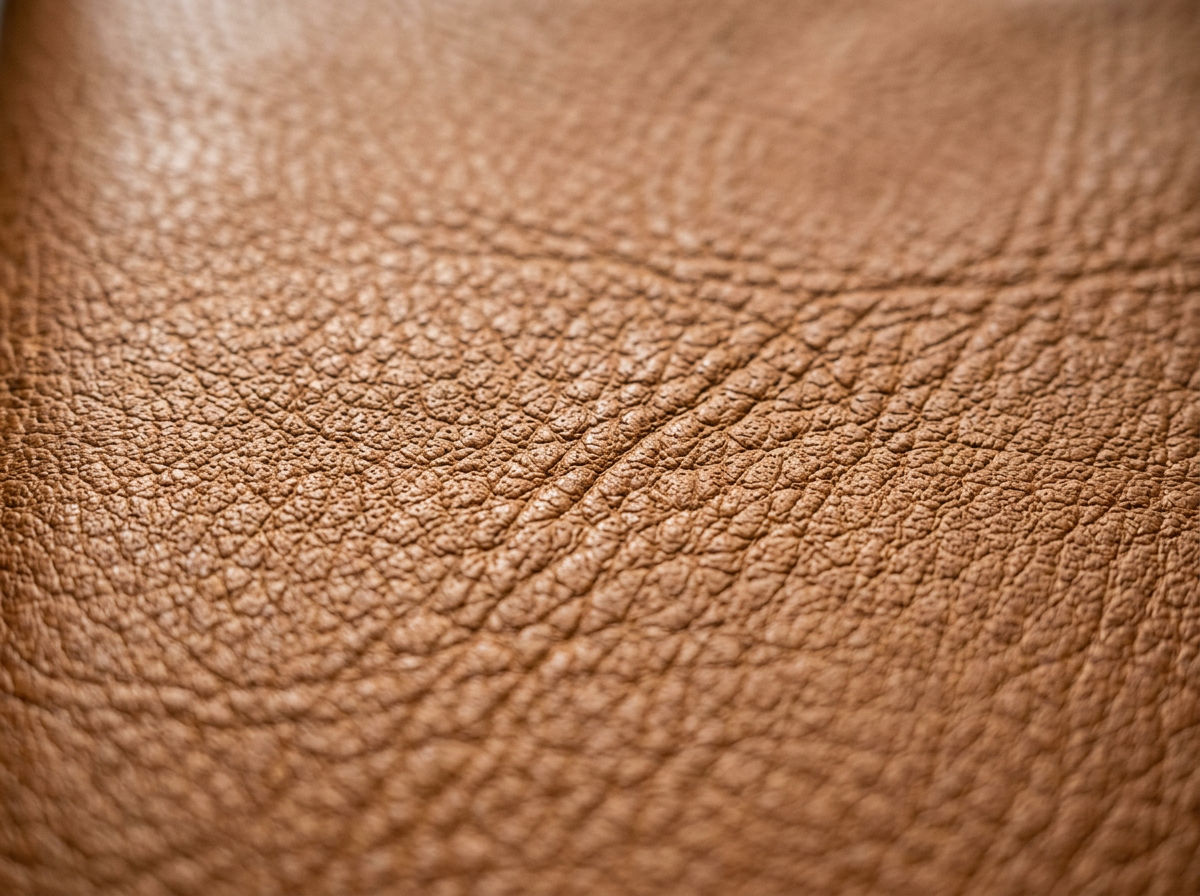
Forthcoming: macro of a leather cover edge curving softly over the gilded page block.
Pick up most hardback books and you feel the edge of the cover immediately — that hard square corner where board meets paper. Pick up a Bible with a yapp binding and you feel something different. The cover doesn't end at the page. It curves past it, softly, folding around the fore-edge like a hand cupped around something worth protecting. Most people notice it without knowing its name. It is one of those details that registers as quality before it registers as craft. It has a name. Two of them, in fact. And they carry more history than you might expect from a few millimetres of leather.
The bookseller's idea.
The yapp binding takes its name from William Yapp, a London bookseller who traded in the mid-nineteenth century from premises on Ludgate Hill. In the 1860s, Yapp commissioned a style of cover for devotional books — pocket Bibles and prayer books — in which the soft leather extended beyond the page block and folded inward at the fore-edge and bottom edge. The logic was practical. India paper, even then, was extraordinarily thin and delicate. An unprotected edge, carried in a coat pocket or a bag for decades, would eventually fray, yellow and curl. The extended cover solved the problem before it began. The pages were held in, surrounded on all sides by supple leather, shielded from the friction and damp of daily carry. Yapp didn't invent the idea — similar approaches appear in earlier bookbinding traditions — but he popularised it for the mass Bible market, and his name is the one that stuck. A century and a half later, binding houses still call it by his name.
What it actually does.
A yapp cover performs three functions that are easy to overlook until you've used a Bible without one.
- ◆It protects the page block. Bible paper is astonishing stuff — engineered to be thinner than a human hair and last a century — but it is not impervious. The fore-edge, in particular, where pages are most exposed to handling, is vulnerable to moisture, abrasion and the accumulated stress of being pressed into a bag. A yapp cover seals that edge behind leather.
- ◆It allows the cover to curl naturally. A rigid board cover has to stay open under its own tension. A yapp cover — made from soft, flexible leather without a hard board beneath it — has no such tension. It follows the hand. Hold the book one-handed, and the cover wraps gently around your palm. Hold it open on a table and the pages settle flat without needing to be held down. This is not incidental to the design. It is the point of it.
- ◆It signals intention. A yapp Bible is, by definition, a Bible meant to be carried, held and used. The cover is not decorative armour. It is an accommodation to the body — built around how a person actually reads, with both hands, or one, with a thumb marking a page, on the bus, in church, in a garden. The overhanging leather says: this book is for use.
“"The extended cover sealed the page edges behind leather — and in doing so, it changed what a Bible felt like to carry. The book became an object that was easy to hold and hard to damage."”
Semi-yapp and full yapp.
These two terms appear in Bible specifications and are easy to confuse. They describe the same principle at different scales. In a full yapp, the leather overhang is generous — typically 10mm or more on each side. The fore-edge flap, in particular, is long enough to fold inward across the page block, enclosing it almost completely when the Bible is closed. Some full yapp covers have a fold at the bottom edge too. The result, closed, is a Bible with no exposed page edges at all: every surface is leather. In a semi-yapp, the overhang is subtler — usually 4–6mm. The leather extends past the page block, giving the same softness and tactile quality as a full yapp, and still protecting the fore-edge, but without the wrap-around flap. This is the more common form in contemporary premium Bibles. It's the feel you notice without necessarily knowing what you're noticing. Neither is better in any absolute sense. Full yapp is the older tradition, and gives the book a distinctly devotional, almost portable-altar quality. Semi-yapp is quieter — it reads as a premium detail rather than a statement, and suits readers who want a book that looks elegant on a desk as well as being easy to carry. The choice often comes down to how the Bible will be used. Carried everywhere? Full yapp protects more completely. Kept at a reading desk, used daily at home? Semi-yapp is likely all you need.
The materials that make it possible.
Not all leathers can do this. The yapp technique requires a cover material that is simultaneously strong and supple — one that can curve without cracking, hold a gentle fold without fatiguing and return to shape after being compressed in a bag. Goatskin is the natural choice. Its fine, tight grain and low thickness — typically around 0.5–0.8mm for Bible covers — give it the flexibility that full and semi-yapp demand. Chrome or vegetable-tanned goatskin from specialist tanneries in Nigeria and South India is used by the leading Bible publishers who still produce yapp bindings: R.L. Allan, Cambridge University Press, and a small number of continental binders. Bonded leather — a composite of leather scraps and synthetic adhesive — cannot do this. It will bend, but it will eventually crack at the fold. Genuine leather improves under use; bonded leather degrades. This is not snobbery. It is physics. Limp covers can also be made from high-quality imitation leather — the best of which, such as the materials used by Schuyler and some Cambridge editions, have become genuinely impressive in their softness and longevity. These can carry a semi-yapp without difficulty. But they won't develop the same patina over decades, and they remain clearly different in the hand from natural hide.
The liner: the hidden second skin.
Inside a quality yapp cover, beneath the outer goatskin, lies a liner — a thin layer of calfskin or split-cowhide leather glued to the interior face of the cover. This is the part of the binding you rarely read about, and yet it affects everything. The liner does two things. It adds structure without rigidity — enough to give the cover some body, so it doesn't collapse entirely when held, while still remaining completely flexible. And it provides the smooth, dry surface that the endpapers attach to. A leather-lined yapp cover, done well, is the work of a craftsperson who has thought about every gram of the book. The liner is cut to size, hand-applied and trimmed. On the best examples, the corners are pleated by hand — a small and almost invisible act of care. The alternative is a paper or card liner, which gives a crisper finish and is significantly cheaper to produce. Most Bibles below a certain price point use this. It is not wrong. But you feel the difference the first time you hold both.
Why it fell away — and why it hasn't disappeared entirely.
For much of the twentieth century, yapp bindings were the norm rather than the exception for leather Bibles. After the Second World War, as mass production accelerated and binding costs were squeezed, the style declined. Semi-rigid boards with tight leather covers were faster to produce and easier to standardise. The yapp required hand-work at several stages — especially the lining, the corner-pleating and the trimming of the fore-edge flap — that didn't sit well with a production line. By the 1990s, yapp bindings had become markers of the very top of the market. And they remain that today — not because the technique is especially exotic, but because it still requires hands and time. You cannot automate the feel of a well-made limp cover. A machine can apply glue. It cannot tell whether the result is supple. The resurgence of interest in premium Bibles over the past fifteen years — the attention to grain, paper weight, typesetting, ribbon markers — has brought yapp back into wider conversation. People who care about how their Bible is made tend to end up caring about the cover. And once you know what a yapp feels like in the hand, a rigid board cover on a Bible starts to feel like a category error. A book meant to be carried and held, built as though it were meant to stand on a shelf.
How to tell the difference at a glance.
If a product listing doesn't specify, there are a few signs to look for.
- ◆Cover material. Genuine leather or quality imitation leather are the only materials you'll find yapp bindings in. Hardboard or semi-rigid covers cannot be yapp by definition.
- ◆Weight. Yapp Bibles typically weigh slightly less than their rigid-cover equivalents, because the binding contributes less mass than a board structure would.
- ◆The language. Terms like limp, flexible cover, calfskin-lined and semi-yapp in a product description are strong indicators. A listing that emphasises stiff, padded or hard-wearing in the cover description is describing something different.
- ◆The photographs. A limp yapp cover won't hold perfectly square corners. If the cover looks as though it could have been cut from cardboard, it's a rigid binding. If the leather looks as though it could fold around your hand, it's limp.
Every Bible we sell lists its cover construction in full — binding type, liner, and where the cover extends beyond the page block.
What the overhang is really saying.
There is a temptation to read a yapp binding as luxury for its own sake — a signal of expense and prestige rather than a considered functional choice. That reading misses the point. The overhang exists because someone once thought seriously about how a Bible is actually used. Not displayed. Not stored. Held, repeatedly, in hands of all sizes, for a lifetime. The cover that wraps past the page was designed to serve that use: to protect the pages, to follow the palm, to make the book easier to open and easier to keep open. The detail is quiet. It adds no text. It announces nothing. But it is the difference between a Bible that was made for reading and one that was made for selling. Hold one and you'll feel it. There's nothing else to say after that.
Every Bible we sell lists its paper weight, binding type and leather — so you can choose with the same care you've just been reading about.
See the collection