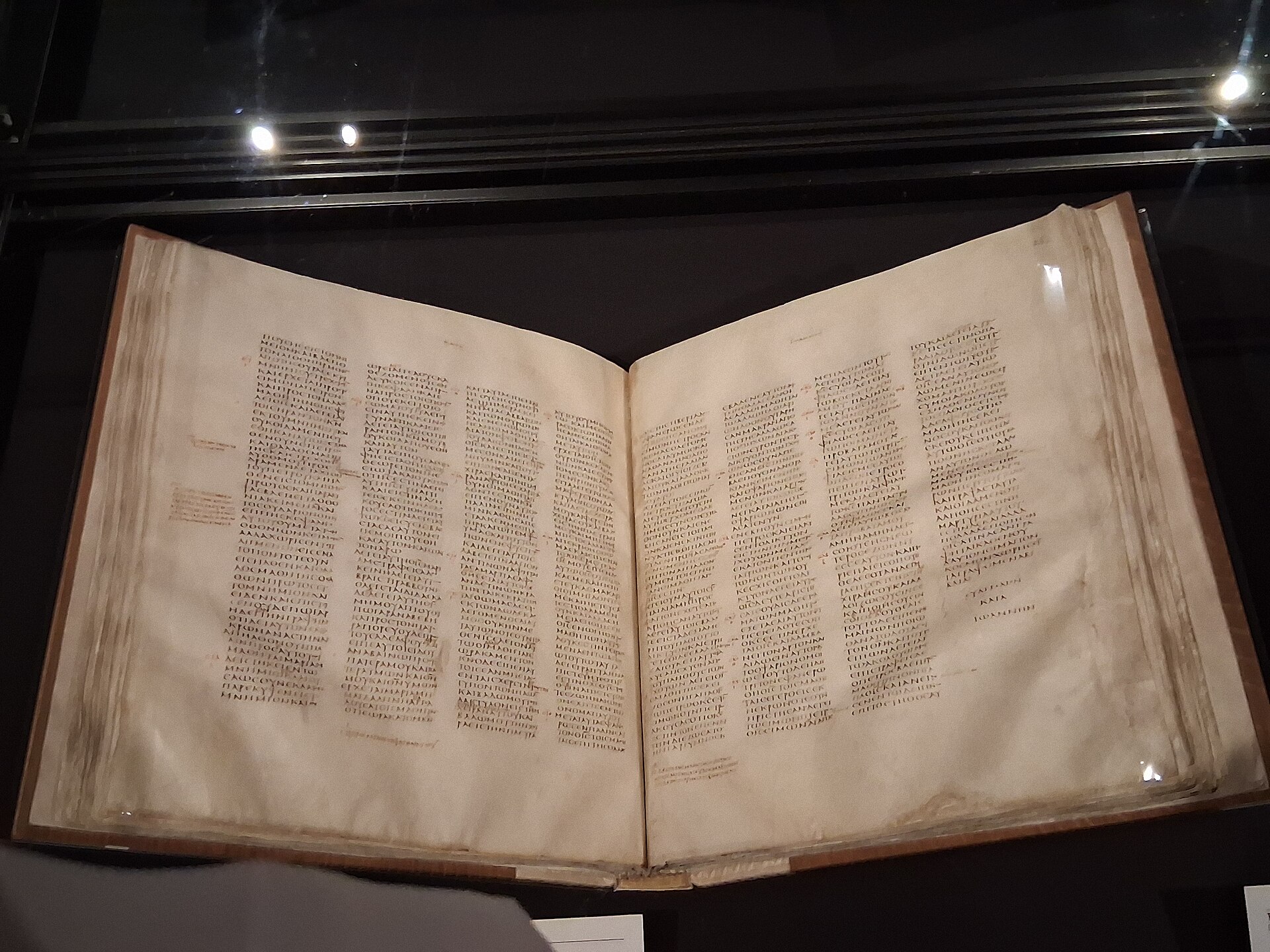
Opening reflection
Many people pick up the Bible expecting it to read like a single modern book — one author, one consistent style, one straight line from beginning to end. When the opening pages feel unfamiliar, it’s easy to assume the problem is you. It isn’t. The Bible is a library that gathers many kinds of writing across many centuries into one ongoing story. Learning what kind of book you are holding is the first step to reading it with confidence.
- Describe the Bible as a library of writings held together by one larger story.
- Name the two main parts of the Christian Bible and what they roughly contain.
- Recognise that the Bible contains several different kinds of writing.
- Approach the Bible with patience rather than expecting it to behave like a modern novel.
- Understand why context (where a passage sits) shapes what it means.
Key Bible passages
2 Timothy 3:14–17
A short New Testament reflection on what Scripture is for: teaching, correcting and equipping.
Psalm 119:105
A famous image — the word as a lamp — that captures how readers have valued the Bible for centuries.
Luke 24:27
Jesus himself treats the Scriptures as one connected story that points to him.
Open these in your Bible, or in a free reader like Bible Gateway or YouVersion.
Teaching
A library, not a single book
The Bible is best thought of as a small library bound between two covers. Most Christian Bibles in the UK contain 66 books, written by many different authors over roughly 1,500 years, in three original languages: Hebrew, Aramaic and Greek.
Inside that library you’ll find very different kinds of writing — origin stories, family histories, poetry, prayers, prophecy, biographies of Jesus, letters to early churches, and a closing book of visions. Each kind of writing has its own rhythm and asks to be read on its own terms. A psalm is not a legal document. A letter is not a law code. A story is not a sermon.
Holding all this together is one larger story — sometimes called the biblical narrative — about God, the world, human beings and the long arc towards renewal. Christians have always read individual passages in light of that whole.
Old Testament and New Testament
The Bible is divided into two main parts. The Old Testament (sometimes called the Hebrew Bible) is the older and longer collection. It tells the story of the world’s beginnings, the calling of a particular family (Abraham, Sarah and their descendants), and the long history of the people of Israel.
The New Testament is shorter. It opens with four accounts of the life of Jesus (the Gospels), continues with the story of the early church (Acts), and then collects letters written to small Christian communities scattered across the Roman world. It closes with Revelation, a vision-rich book about hope at the end of all things.
Christians read the two testaments together. The New Testament constantly draws on the Old. The Old Testament, in turn, sets the questions and hopes that the New Testament returns to.
Why it can feel confusing at first
If the Bible feels strange when you first open it, that is normal. You are reading texts written in a different language, in a different culture, in a different era, by authors who assumed their first readers shared a particular world.
It also helps to know that the Bible isn’t arranged in straightforward chronological order. The books are grouped more by type than by date. So flipping from Genesis to Psalms to Romans is a bit like jumping between very different sections of a library.
Patience matters more than speed. Reading a little, regularly, with attention, will take you further than rushing through long sections to tick off chapters.
Why context matters
A single sentence pulled out of the Bible can sound very different from what the author meant. The cure is simple: read a verse in the paragraph it sits in, read the paragraph in the chapter, and read the chapter in the book. Context isn’t an academic luxury — it’s how language always works.
As you read, you’ll begin to notice the kind of writing in front of you (story, poem, letter), the situation it was first addressed to, and how it fits into the wider biblical story. This is the slow craft of becoming a careful reader.
How this helps you read the Bible
- Knowing the Bible is a library stops you expecting a single, even tone from cover to cover.
- Knowing where you are in the library helps you read with the right expectations.
- Knowing the whole has a shape gives small passages somewhere to belong.
Spend ten minutes sampling four very different parts of the Bible — just enough to feel how varied it is. Don’t try to interpret; just notice the change in tone and shape.
- Genesis 1:1–5 — the opening of a foundational story
- Psalm 23 — a short, well-loved poem of trust
- Mark 1:1–8 — the opening of a Gospel
- Philippians 1:1–6 — the greeting of a New Testament letter
Questions to ask
- What differences did you notice between the four passages above?
- Which one felt most familiar? Which felt most unfamiliar?
- What might it mean to say the Bible is a library held together by one story?
- Why might the same Bible contain both poems and letters?
- What have you heard about the Bible before opening it that you’d like to test for yourself?
- What would help you keep reading patiently over the next eleven sessions?
In Session 2 we’ll zoom out and trace the single story the Bible tells — from creation through Israel and Jesus to new creation.
Continue learning
Mark this session as complete to keep track of where you are.