Where Bible leather comes from
The goat's life is written into the cover. Scratches, scars and all.
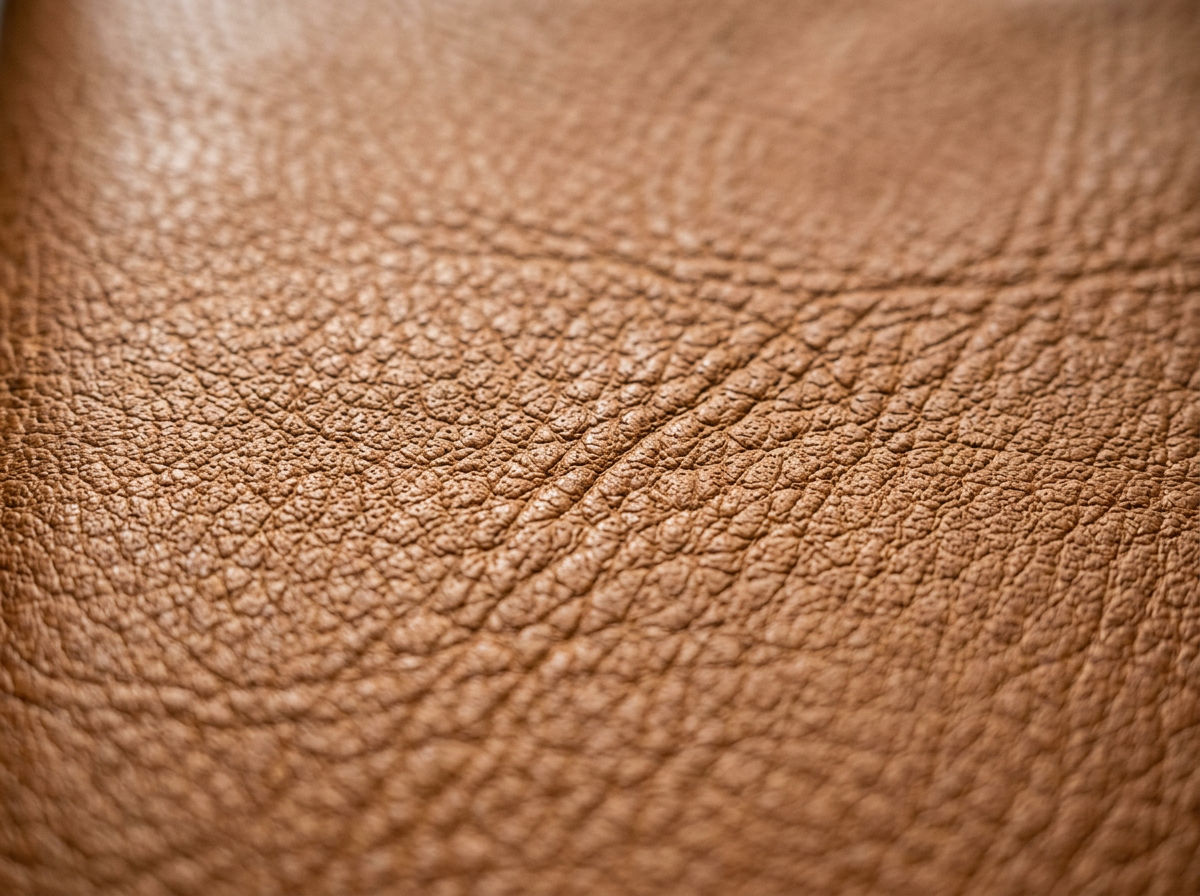
Extreme macro of natural full-grain goatskin leather showing pebbled grain in soft raking light.
The goatskin on a premium Bible started as a goat. Most likely in Nigeria. Possibly in South India. Almost certainly somewhere with a hot, dry climate, where the hide of the animal develops the tight, fine grain that bookbinders prize above almost any other material.
Why goatskin.
Bookbinders have used goatskin for centuries because it offers a combination that no other leather quite matches: extreme softness, real strength, and a natural beauty that develops with use. Unlike most other leathers used in bookbinding, goatskin retains its actual grain. It is not pressed into a mould. The texture you feel under your fingertips is the actual surface of the hide.
Cowhide and pigskin covers are typically embossed — a uniform pattern stamped into the leather to make it look more interesting than it is. Goatskin needs no help. The grain it was born with is more beautiful than anything a die could produce.
The goat's life, written into the cover.
Because the grain is natural, the goat's life is, in a sense, recorded in the leather. A scratch from barbed wire. A bite from an insect. A rub mark from a fence post. Faint stretch marks from where the animal grew. These are not defects. They are proof — proof that the cover is genuine, untreated goatskin from an actual animal that lived an actual life.
“Every goatskin Bible cover is unique. The texture is the surface of one specific hide. Hold two side by side and you'll see it.”
Tanning: vegetable vs chrome.
Once a hide is removed and cleaned, it has to be tanned — chemically transformed from raw skin into stable, supple leather. Two methods dominate.
- ◆Vegetable tanning — the traditional method. Uses tannins from tree bark, leaves and other plant sources. Slow (it can take weeks), produces a rich colour, develops a beautiful patina with use, and ages with character.
- ◆Chrome tanning — the modern method. Uses chromium salts. Faster (often a matter of days), more consistent in colour, more uniform in finish, but with less depth of character over time.
The finest Bible goatskin is usually vegetable-tanned, then carefully dyed and softened over a sequence of finishing steps. The result is a cover that gets better, not worse, with twenty years of being held in someone's hands.
An honest note.
Leather is a by-product of the meat industry. Premium tanneries are increasingly investing in traceability and sustainable practice — both because customers ask for it, and because the people doing this work have always taken pride in not wasting an animal. None of which makes the question simple. But it is, at least, an industry where the material has a story.
What it feels like to hold one.
The first time you pick up a properly broken-in goatskin Bible — one that's been carried around for a decade or two — the experience is different from any other book in your life. The cover is supple. It falls open in your hand. The leather smells faintly of old libraries. There are tiny marks on the surface that belong to this book and no other.
What you're holding was once alive. It was crafted by hand. It will age and soften with you over decades. It will, eventually, be handed on. There is not much else, in modern life, that can quite say all of that at once.
Every Bible we sell lists its paper weight, binding type and leather — so you can choose with the same care you've just been reading about.
See the collection