Red under gold: the ancient art of Bible gilding
That stripe of gold isn't just decorative. It seals, protects, and reveals.

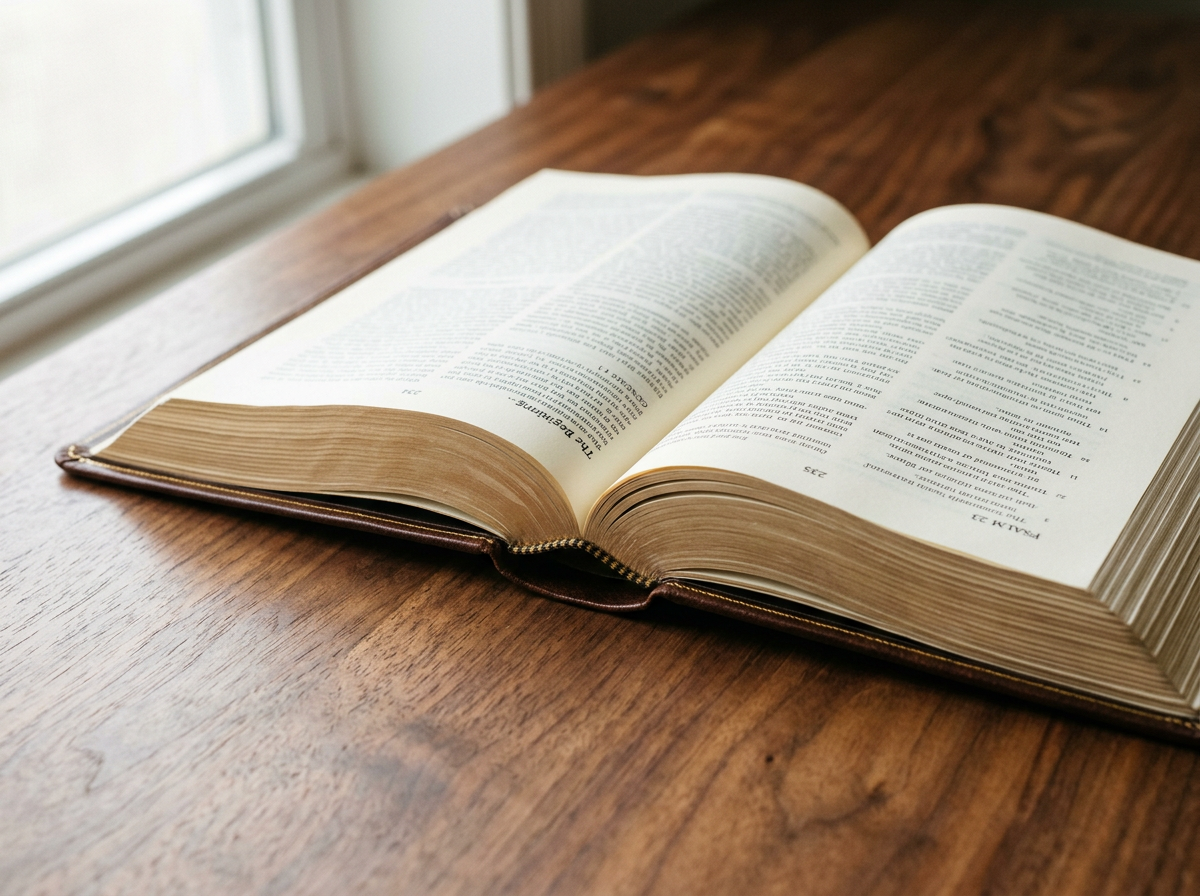
Macro close-up of the gilded fore-edge of a leather Bible showing deep red art-gilt beneath the burnished gold.
A Bible closed on a table. A stripe of light along the edge — the gold catching whatever sun is in the room. Pick it up, fan the pages, and a flash of deep red appears underneath. Closed again, the red disappears. Open the book, and there it is again, just visible at the edge of the paper.
This is art gilding. And once you start noticing it, you can't stop.
Why we gild at all.
Gilding is the process of applying metallic foil — gold, silver, or imitation gold — to the edges of a Bible's pages. It looks decorative. It is decorative. But it's also doing real work.
- ◆It seals the page edges against dust and humidity — important for a book made of paper this thin.
- ◆It makes the delicate pages easier to grip and separate when thumbing through.
- ◆It protects the edges from fraying and wear over decades of use.
- ◆It repels moisture that would otherwise produce the characteristic 'wavy edges' of an ungilded thin-paper book.
The process.
The book block — sewn, glued and trimmed — is clamped tightly together so the page edges form a single hard surface. That surface is sanded until it's perfectly smooth, almost polished. A heated foil is then pressed onto the edge under pressure. As it cools, the foil bonds to the paper, creating a thin, durable, decorative seal.
On the very best editions, 22-carat gold leaf is used. On mid-range Bibles, an imitation gold foil is more common — less expensive, equally pretty when fresh, but more prone to dulling over the years. Real gold doesn't tarnish.
And then, the colour underneath.
Art gilding — sometimes called page dyeing — is the additional step that produces the 'red under gold' effect. After the gilt is applied, a thin layer of coloured dye is added to the page edges. The gold shows when the Bible is closed; the colour appears when the pages are fanned, or when the book is open and the inside edge of the block catches the light.
“Red under gold is the most traditional. Blue under silver is contemporary. Burgundy, purple, forest green — all live in the same craft tradition.”
Art gilding is found almost exclusively on premium editions. It requires extra time, extra materials, extra handling — and the foil application itself depends on specialist machinery that only a handful of binderies in the world possess. Some artisan rebinders offer custom art gilt as a service, hand-finishing each book one at a time.
Choosing a colour.
The colour of the art gilt is never random. A good binder will choose it to complement the leather, the head bands and the overall character of the book. A burgundy goatskin Bible with red under gold feels of a piece — confident, traditional, slightly austere. A black Bible with blue under silver feels modern and considered. A cream calfskin Bible with rose-pink art gilt feels like a gift.
It's a small decision. It's also one of the things that can make a Bible feel finished — like every part of it has been thought about by somebody.
The next time you pick up a Bible with gilded edges, fan the pages slowly. If you see a flash of colour underneath, you're holding a book whose maker cared about a detail almost nobody asks about. That's usually a sign they cared about the rest of it, too.
Every Bible we sell lists its paper weight, binding type and leather — so you can choose with the same care you've just been reading about.
See the collection