Ribbons, hubs and head bands
A love letter to the finishing touches that turn a book into an heirloom.
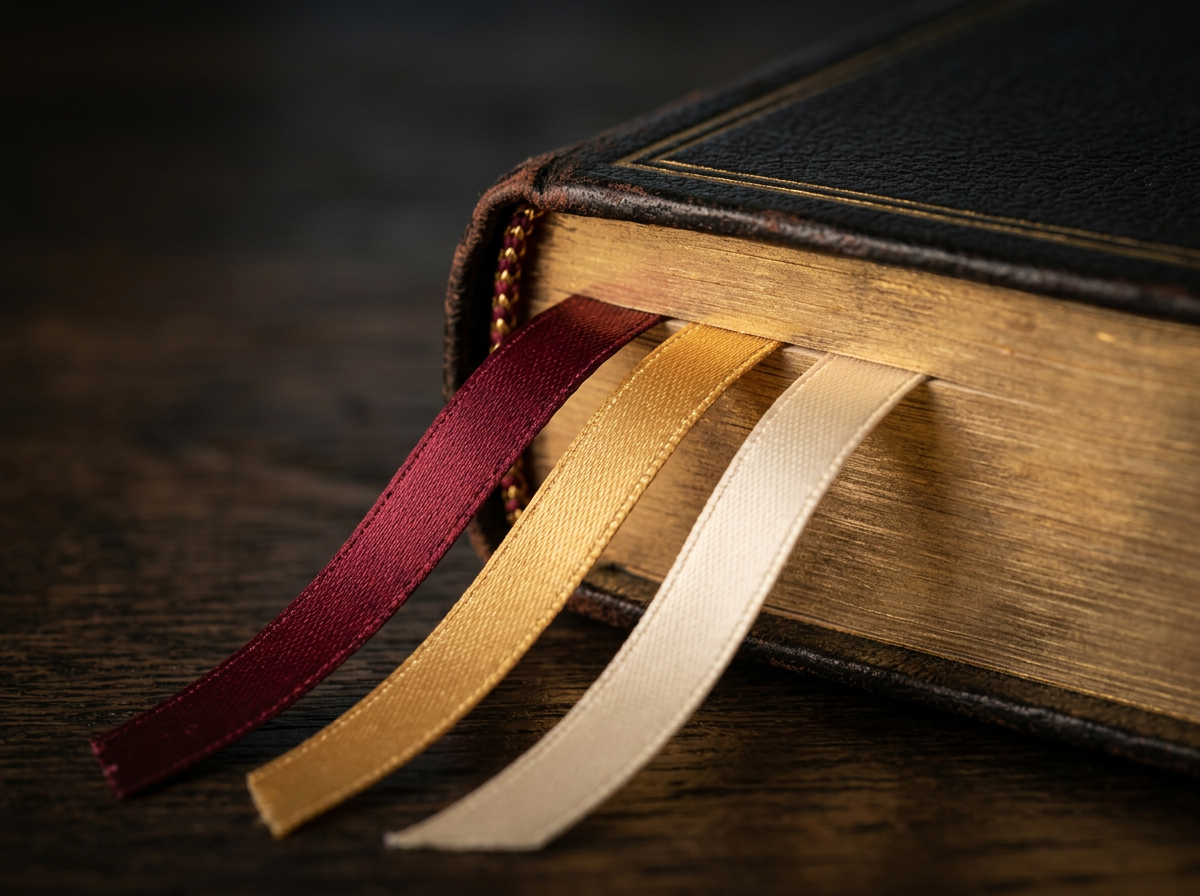
Three satin ribbon markers — burgundy, gold and cream — emerging from the gilded edge of a leather Bible.
This isn't an article so much as a love letter. To the small details. The ones that distinguish a well-made Bible from a merely adequate one. The ones most people never notice — until they pick up the version without them, and feel the absence.
Ribbon markers.
Their width matters. A thick satin ribbon sits flat against the page; a thin nylon one curls and slips. Their number matters: two or three ribbons let you mark your place in the Old Testament, the New Testament and a psalm or study passage at the same time. Their colour is rarely accidental — chosen, in premium editions, to complement the leather and the gilt.
Head and tail bands.
Those small woven coloured strips at the top and bottom of the spine. Once functional — they helped readers pull books off tightly packed shelves — now decorative, but never random. The colour is selected to sit with the leather, the ribbons and the overall character of the book. On the best editions they are hand-sewn.
Hubs.
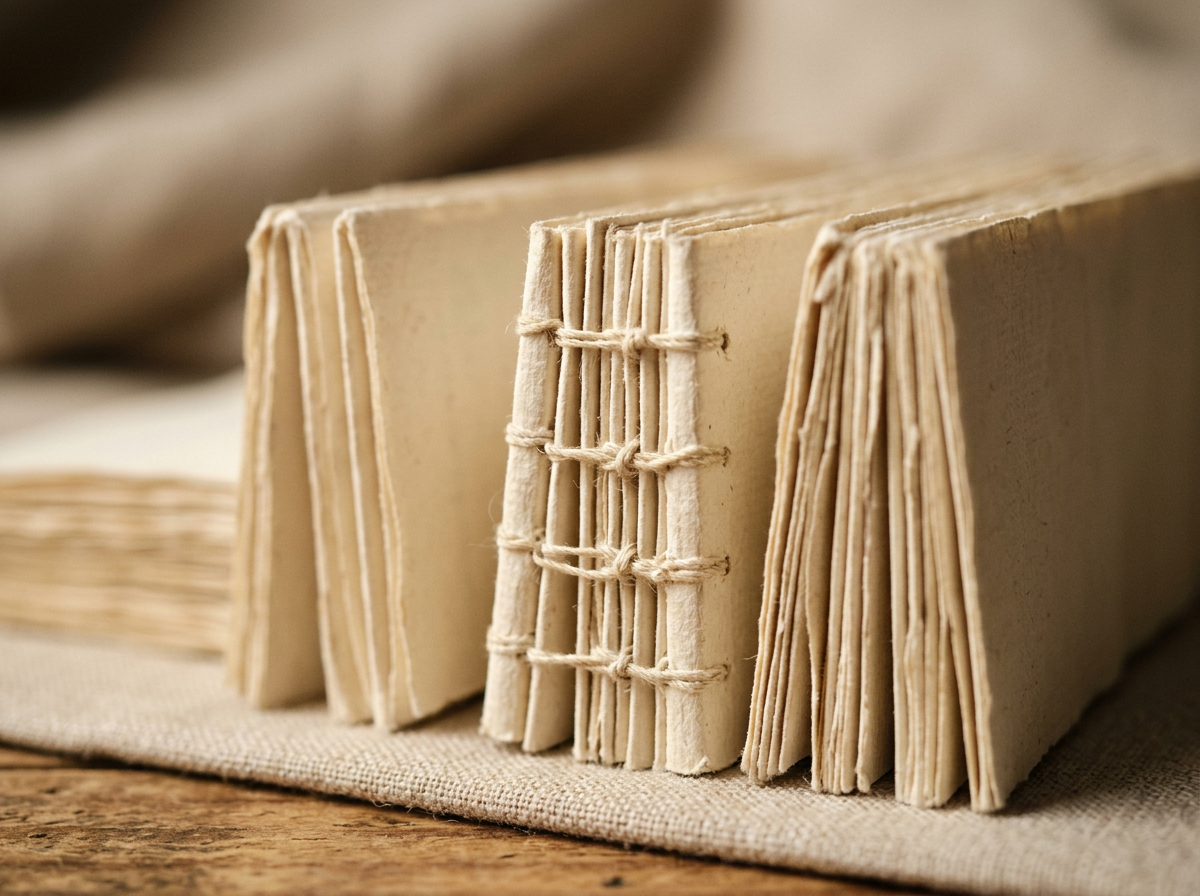
The raised ridges on the spine. In historical bookbinding these were structural — formed by the cords that the signatures were sewn onto. Today they're usually decorative, formed with moulded board under the leather. But they give a Bible a particular presence on a shelf and a satisfying, weighted feel in the hand.
Gilt lines.
A thin gold rule stamped around the inside perimeter of the front and back covers. Purely decorative. Purely beautiful. The kind of detail that adds nothing to the reading experience and everything to the sense that this book was finished, rather than merely manufactured.
Endpapers.
The coloured or patterned paper glued inside the front and back covers. In premium Bibles, these are chosen to complement the leather — cream, marbled, deep burgundy, occasionally a quiet pattern. The endpaper is the first thing you see when you open the book. It sets the tone.
The presentation page.
A page near the front, with space to record the recipient's name, the date, the occasion, and whoever is giving it. A small thing. But it's the thing that turns a book into an heirloom.
“These are the details that turn a book into something somebody, one day, will inherit.”
None of these details, on their own, makes a Bible. But together — the ribbons, the head bands, the hubs, the gilt lines, the endpapers, the presentation page — they signal something the publisher cannot quite say out loud: that this object was made on the assumption it would be kept, used, loved, and eventually passed on.
Every Bible we sell lists its paper weight, binding type and leather — so you can choose with the same care you've just been reading about.
See the collection